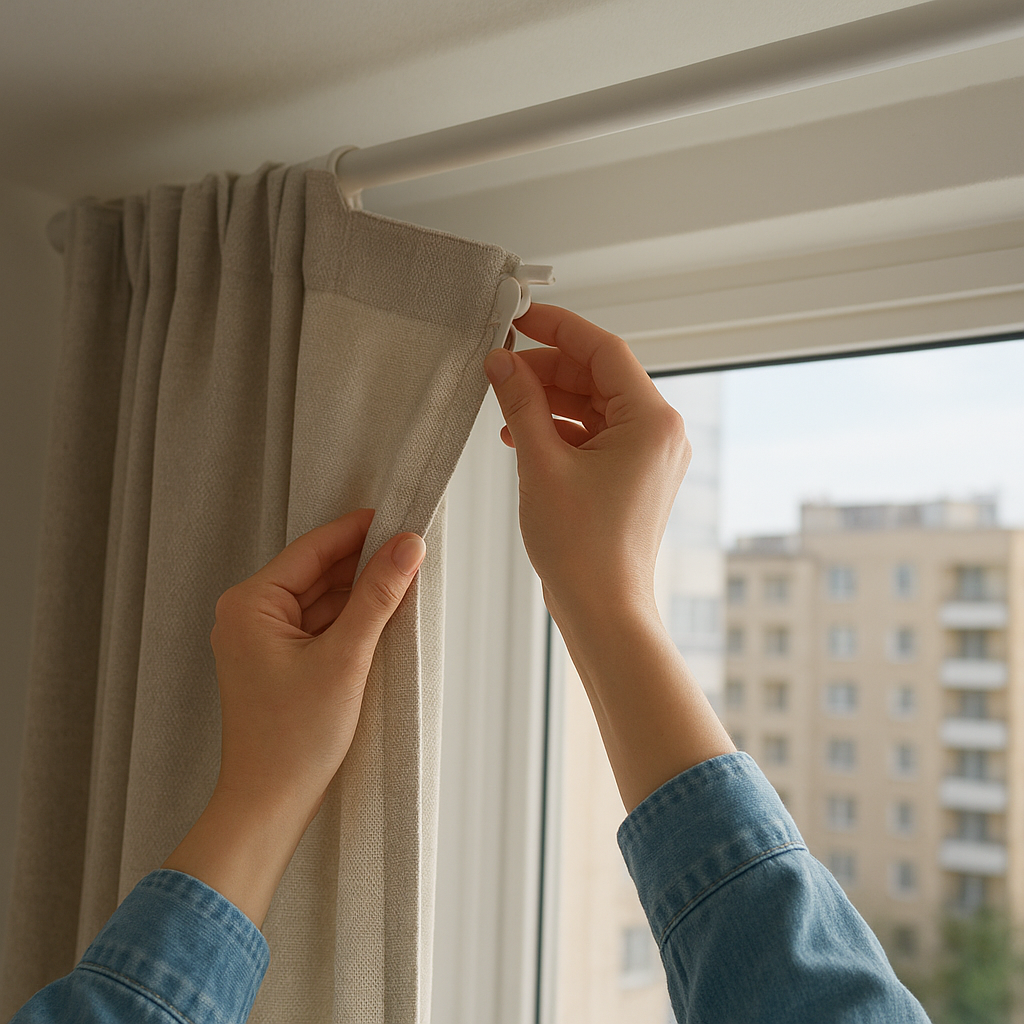
The best way to hang curtains in an apartment depends on your window design, curtain weight, and rental agreement. For renters who cannot drill holes, tension rods, adhesive curtain rod hooks, and no-drill brackets are practical options. Tension rods work well for lightweight curtains inside suitable window frames, while specialized brackets can support other curtain arrangements. Heavy blackout curtains usually require stronger hardware. If your landlord allows drilling, a traditional curtain rod with securely installed brackets offers a reliable solution.
What Is the Best Way to Hang Curtains in an Apartment?
For most renters, the easiest approach is to choose a curtain mounting system that doesn’t require permanent wall modifications.
Consider these options:
- Tension rods: Suitable for lightweight curtains when the window opening has two stable, opposing surfaces.
- Adhesive curtain rod hooks: Useful on compatible smooth surfaces when the combined weight stays within the manufacturer’s limit.
- No-drill brackets: Designed to attach to certain window frames, trim, or existing blind hardware without drilling.
- Traditional curtain rods: A sturdy choice for heavier curtains when drilling is permitted.
Before choosing a method, measure your window, check the total curtain weight, and review your lease. No single installation method works for every apartment.
How to Hang Curtains Without Drilling
There are several ways to install apartment curtains without making holes in the walls.
Use a Tension Rod
A tension rod fits between two opposing surfaces and stays in place through adjustable pressure. It’s one of the simplest solutions for rental apartments.
- Measure the inside width of your window opening.
- Choose a tension rod with a compatible length range and sufficient weight capacity.
- Adjust the rod until it fits securely between the sides of the opening.
- Slide the curtain panels onto the rod or attach them using suitable rings.
- Check that the rod remains stable when the curtains are opened and closed.
Tension rods work best with lightweight curtains and sturdy window recesses. They may slip on smooth surfaces or damage delicate trim if excessive pressure is applied.
They are generally unsuitable for particularly heavy drapes unless the product is specifically rated for that load.
Use Adhesive Curtain Rod Hooks
Adhesive hooks designed to hold curtain rods provide another installation option without drilling.
To install them, first confirm that the wall surface is compatible with the product. Clean the mounting area according to the manufacturer’s directions and allow it to dry.
Attach the hooks at matching heights on either side of the window, following the specified application procedure. Allow the adhesive to develop its required bond before placing the rod and curtains on the hooks.
Check the combined weight of the rod, curtain panels, and accessories against the product’s stated capacity.
For example, Command’s curtain rod hook instructions explain surface preparation, installation, and the required waiting period.
Adhesive hardware isn’t guaranteed to be damage-free. Improper application or removal can peel paint or damage delicate wall finishes.
Use No-Drill Curtain Brackets
Specialized no-drill brackets may attach directly to compatible window trim, frames, or existing blind mounting hardware.
Some designs grip the top of a window frame, while others use mechanical clamps or existing hardware to support a curtain rod.
Before purchasing, check the required trim dimensions, frame material, mounting clearance, and maximum supported weight.
Not every bracket works with vinyl, wood, aluminum, or recessed windows. Always follow the instructions for your specific window and bracket combination.
How to Install a Traditional Curtain Rod
If your rental agreement permits drilling, a conventional wall-mounted curtain rod provides secure support, especially for heavier curtains.
Follow these basic steps:
- Measure the window. Determine the width and where you want the curtains to hang.
- Mark the brackets. Use a pencil to identify mounting positions on both sides of the window.
- Check alignment. Use a level to make sure the bracket marks are even.
- Install the hardware. Drill appropriate holes and attach the brackets using fasteners suitable for the wall material.
- Hang the curtains. Place the curtain panels on the rod, secure it in the brackets, and check stability.
Drywall may require suitable anchors, while concrete, masonry, and wooden surfaces need different fasteners. Avoid drilling near electrical wiring or other concealed utilities.
The IKEA curtain rod installation guide explains the basic tools and mounting process.
How to Measure and Position Curtains in an Apartment
Correct measurements help curtains hang neatly and prevent problems with windows, furniture, and heating equipment.
Start by measuring the window’s width and the distance from the intended rod position to the floor or windowsill.
For wall-mounted rods, positioning the hardware approximately 4–6 inches above the window frame can make the window appear taller, provided there is sufficient clearance.
Extending the rod several inches beyond each side of the window can also make the opening look wider and allow curtains to stack away from the glass.
Common curtain lengths include:
- Windowsill length: Ends near the sill and works well for smaller windows.
- Above-floor length: Stops slightly above the floor for easier cleaning.
- Floor length: Reaches the floor for a full-length appearance.
Check that the curtains won’t interfere with window handles, air conditioners, baseboard heaters, or radiators. Fabric should never obstruct heating equipment or create a fire hazard.
For additional measuring guidance, see IKEA’s window measurement recommendations.
How to Hang Curtains Without Damaging Rental Walls
Renters should take a few precautions before installing any window treatment:
- Check your lease. Confirm whether drilling, adhesive mounting, or modifications to window trim are allowed.
- Reuse existing hardware. If the apartment already has secure curtain brackets or rods, using them may be the simplest solution.
- Respect weight limits. Include the weight of the rod, curtains, and accessories when selecting hardware.
- Protect wall finishes. Avoid applying adhesive mounts to loose paint, wallpaper, or incompatible textured surfaces.
- Remove hardware correctly. Follow the manufacturer’s instructions rather than pulling adhesive hooks directly off the wall.
- Support heavy curtains properly. Blackout curtains and thick drapes may require stronger brackets or additional supports.
Even no-drill mounting systems can leave marks or cause damage if installed incorrectly. For particularly heavy curtains, obtaining permission for secure conventional mounting may be preferable to risking a falling rod.
Ultimately, tension rods are often the easiest option for lightweight curtains in recessed windows. Adhesive hooks and specialized brackets offer additional flexibility, while traditional rods are better suited to installations requiring stronger support. The right choice depends on your apartment’s construction, curtain weight, and rental restrictions.